
Controls and controllers
Generator Control Panel Repairs: Controllers, Alarms and Auto-Start
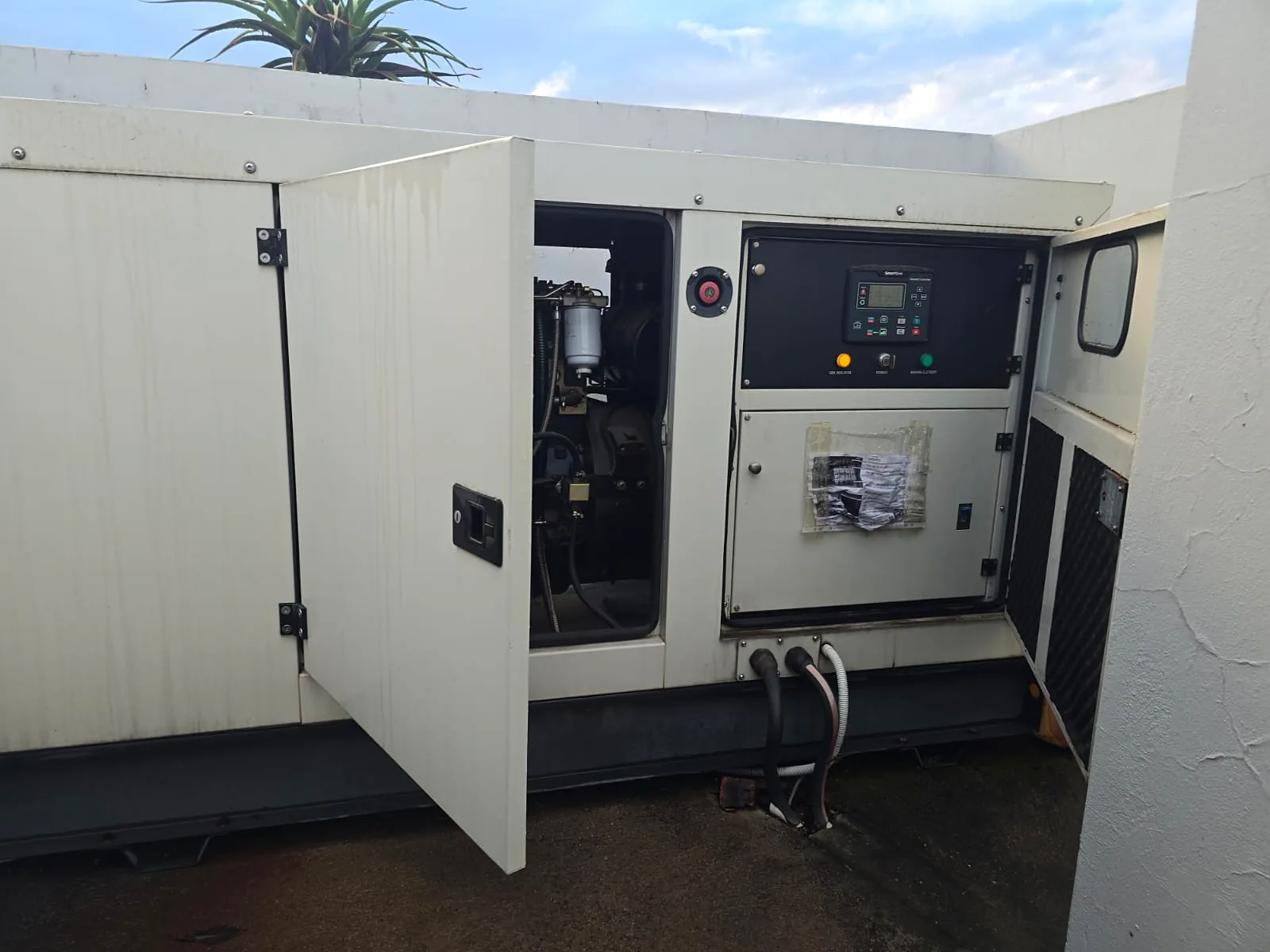
We repair generator control panels on site across Gauteng: blank screens, false alarms, auto-start and mains-sensing faults, failed relays and fuses, and battery chargers. We find whether the fault is in the controller, a sensor or the wiring, repair it or replace and configure the controller, and test the whole start and changeover sequence before we leave.
- DSE, ComAp, SmartGen and older relay panels
- Blank screens, false alarms and unexplained shutdowns
- Auto-start, mains sensing and changeover signals
- Controllers replaced, configured and tested

Established 2006
20 years of experience
24/7 operations
We Arrive Within 1–2 Hours
(usually within 1 hour)
Free callouts and quotations
One-year warranty
Qualified and certified technicians
We Service & Repair All Generator Brands
All generator makes and models
1 kVA–20,000 kVA capability
The basics
What a generator control panel does
Starts and stops the engine
Energises the fuel solenoid (or signals the engine’s electronic control unit) and the starter, stops cranking once the engine fires, and runs a cool-down period before shutting the engine off.
Protects the engine and alternator: Shutting down or tripping
Watches oil pressure, coolant temperature, speed, voltage, frequency and current, and trips or shuts down when a limit is crossed.
Raises alarms and keeps a log: Controller alarms explained
Shows warnings, trips and shutdowns on the screen. Most modern controllers also keep an event log that tells a technician what happened and in what order.
Senses the mains
On an auto-mains-failure (AMF) controller, monitors the incoming supply on each phase and starts the set when it fails or drifts out of limits.
Signals the changeover: ATS and changeover problems
Tells the changeover contactors or ATS when to move the load to the generator, and when to hand it back to the mains.
Keeps the battery charged: Battery not charging
Many panels include a mains-fed battery charger, so the starting battery is full when the next outage comes.
Common control panel faults
| Symptom | Likely causes | Repair route |
|---|---|---|
| Screen blank or dead | Likely causesPower-saving sleep mode on some controllers, a flat battery, a blown control fuse, a corroded battery or earth connection, a failed controller | Repair routeBattery not charging |
| Controller resets or goes blank while cranking | Likely causesBattery voltage collapsing under the starter load, a tired battery, poor cable connections | Repair routeGenerator not starting |
| Alarm keeps returning on a healthy engine | Likely causesFailed sender or switch, a chafed or shorted sensor wire, the wrong sender type in the settings | Repair routeShutting down or tripping |
| Low oil pressure shutdown | Likely causesA genuine loss of oil pressure, or a faulty sender, switch or wire reading wrongly | Repair routeLow oil pressure shutdown |
| Does not start when the power goes off | Likely causesController not in auto, a shutdown alarm still latched, a long start delay, remote-start wiring from the changeover panel | Repair routeChangeover and ATS problems |
| Runs but will not transfer, or will not hand back to the mains | Likely causesChangeover output or relay, contactor coil, interlock, return timer, mains sensing missing a phase | Repair routeChangeover and ATS problems |
| Cranks, then shows fail to start | Likely causesFuel solenoid output or relay, crank-disconnect setting, speed sensing, fuel supply | Repair routeGenerator not starting |
Controllers we work on
DSE, ComAp, SmartGen and older panels
Controllers from Deep Sea Electronics, ComAp and SmartGen are fitted to many standby sets in South Africa, and the model is usually printed on the front of the module. Their menus and alarm wording differ, but they work on the same principles, so the fault finding follows the same order: supply, inputs, outputs, then configuration.
Older generators often have analogue panels: gauges, a key switch, a separate charger and a handful of relays and timers. These are repaired where parts can still be found, or upgraded to a modern auto-start or AMF controller when they cannot. Home standby units, with their built-in controller and matching transfer switch, are covered too.
- Auto-start and AMF modules
- Analogue key-start panels
- Home standby units with built-in controls
Fault finding
How we diagnose a control fault
- 01
Read the controller
The alarm list and event log show what the controller saw, in what order and how often. That is the starting point, not the conclusion.
- 02
Check its supply
Battery voltage at rest and while cranking, the control fuses, and the battery and earth connections. Many control faults turn out to be power faults.
- 03
Compare the readings
What the controller reports is checked against independent measurements: a test gauge for oil pressure, a thermometer for coolant, a meter on the mains-sensing inputs.
- 04
Test inputs and outputs
The relevant inputs, outputs, relays and wires are tested, including the start, fuel and changeover signals.
- 05
Check the configuration
Engine type, sender types, timers and protection limits are compared with the generator and the installation.
The fix depends on what failed
| What we find | Usual fix |
|---|---|
| Faulty sender, switch or sensor | Usual fixReplace it with the type the controller is set up for, and confirm the reading |
| Chafed, corroded or rodent-damaged wiring | Usual fixRepair or re-run the damaged section and secure the loom away from heat and vibration |
| Blown fuse or failed relay | Usual fixReplace it, and find out what overloaded it |
| Wrong or lost settings | Usual fixCorrect the configuration for the engine, senders and site, and record the settings |
| Failed panel battery charger | Usual fixReplace the charger and test the battery it should have been charging |
| Controller damaged by water, heat or a surge | Usual fixReplace the module, configure it for the set and test the full sequence |
| Obsolete analogue panel with no spares | Usual fixUpgrade to a modern controller, wired to the existing engine and changeover |
Replacing and configuring a controller
A new controller is only as good as its setup. It has to know the engine and how its speed is sensed, the type of each oil pressure and temperature sender, the protection limits, the start, transfer, return and cool-down timers, and how the mains is monitored. A module straight out of the box, or one reset to defaults, can shut down a healthy engine or fail to protect a faulty one.
Where the old controller still works, its settings are recorded before it comes out. The new one is wired to the existing harness or a new loom, configured for the set and the site, then put through a full outage sequence: start, take the load, run, hand back to the mains and cool down, with every protection that is safe to trigger checked as well. We also show you what the mode buttons and the main alarms mean.
During load shedding, an AMF set may start, transfer and hand back several times a day, every day. Relays and contactor coils that would cope for years with monthly test runs are worked far harder, and the battery charger has less time on mains to recover the battery between outages. A part that was marginal soon fails under that cycling, so these get a close look on any control callout.
Alarms are messages, not faults
A controller alarm tells you what the controller saw, not necessarily what failed. A low oil pressure shutdown can mean low oil, a worn oil pump, or a sender that reads wrong. Resetting and restarting without finding out which one risks the engine.
We read the event log, compare the controller’s readings with independent measurements, and only then decide whether the engine, the sensor or the controller needs attention. Our guide to controller alarms explains the main alarm categories.

Safe checks before you call
These checks need no tools and no covers opened, and they often save a callout.
- Is the controller in auto? After a test or a service it is sometimes left in manual or stop
- Is an emergency stop button pressed in, on the panel or on the canopy? If one is, find out who pressed it and why before releasing it
- Is the screen lit? If it is dark, press one button once: some controllers sleep to save the battery. Then check that the panel shows the battery charging
- Is there fuel? Check the gauge or the reading on the screen
- Photograph the screen and the alarm list before anything is reset
- Reset an alarm once only. If it comes back, leave the generator stopped
Do not open the control panel. It carries mains voltage from the sensing and charger circuits even when the generator is stopped.
FAQ
Frequently asked questions
Which controllers do you work on?
Deep Sea Electronics, ComAp, SmartGen and the other controllers commonly fitted in South Africa, as well as older analogue panels. We Service & Repair All Generator Brands.
My controller screen is blank. Has it failed?
Not necessarily. Some controllers put the screen to sleep to save the battery, and wake when a button is pressed. A flat battery, a blown control fuse or a corroded connection cuts the controller’s supply altogether. Press a button once, check that the charger shows it is working, and call us if the screen stays blank.
Why does my generator not start on its own during load shedding?
The usual causes are a controller left out of auto, an earlier shutdown alarm that was never reset, a long start delay, or a battery too weak to crank. A blown mains-sensing fuse usually does the opposite and starts the set while the mains is still on. The changeover and ATS guide explains each one.
Can you change the settings on my controller?
Yes, where the controller allows it. Start delays, protection limits and service timers are checked against the generator and the installation before anything is changed, and the new settings are recorded.
My controller shows an alarm I do not recognise. What should I do?
Photograph the screen and send it to us on WhatsApp. Do not keep resetting and restarting the generator until the cause is known.
Is it worth replacing an old control panel?
If spare parts are no longer available or faults keep coming back, a modern controller is usually more reliable and much easier to diagnose. We explain the options and quote before any work.
Will a new controller work with my existing changeover?
Usually. The controller is wired to the existing contactors or ATS and set up for its timers and signals. If the changeover itself is faulty, that repair is quoted separately.
Related pages
Related generator problems
Generator types
Related brands
Who we work for
Need a generator technician?
- 24/7 operations
- We Arrive Within 1–2 Hours (usually within 1 hour)
- Free callouts and quotations