
Emergency callouts · 24/7
Emergency Generator Repairs, Day or Night
If your generator has failed during load shedding or a power cut, call 076 434 7292 at any hour. We arrive within 1–2 hours, usually within 1 hour. Free callouts and quotations. Until the technician arrives, keep people clear, leave shutdowns and the changeover alone, and have the make, size and controller alarm ready.
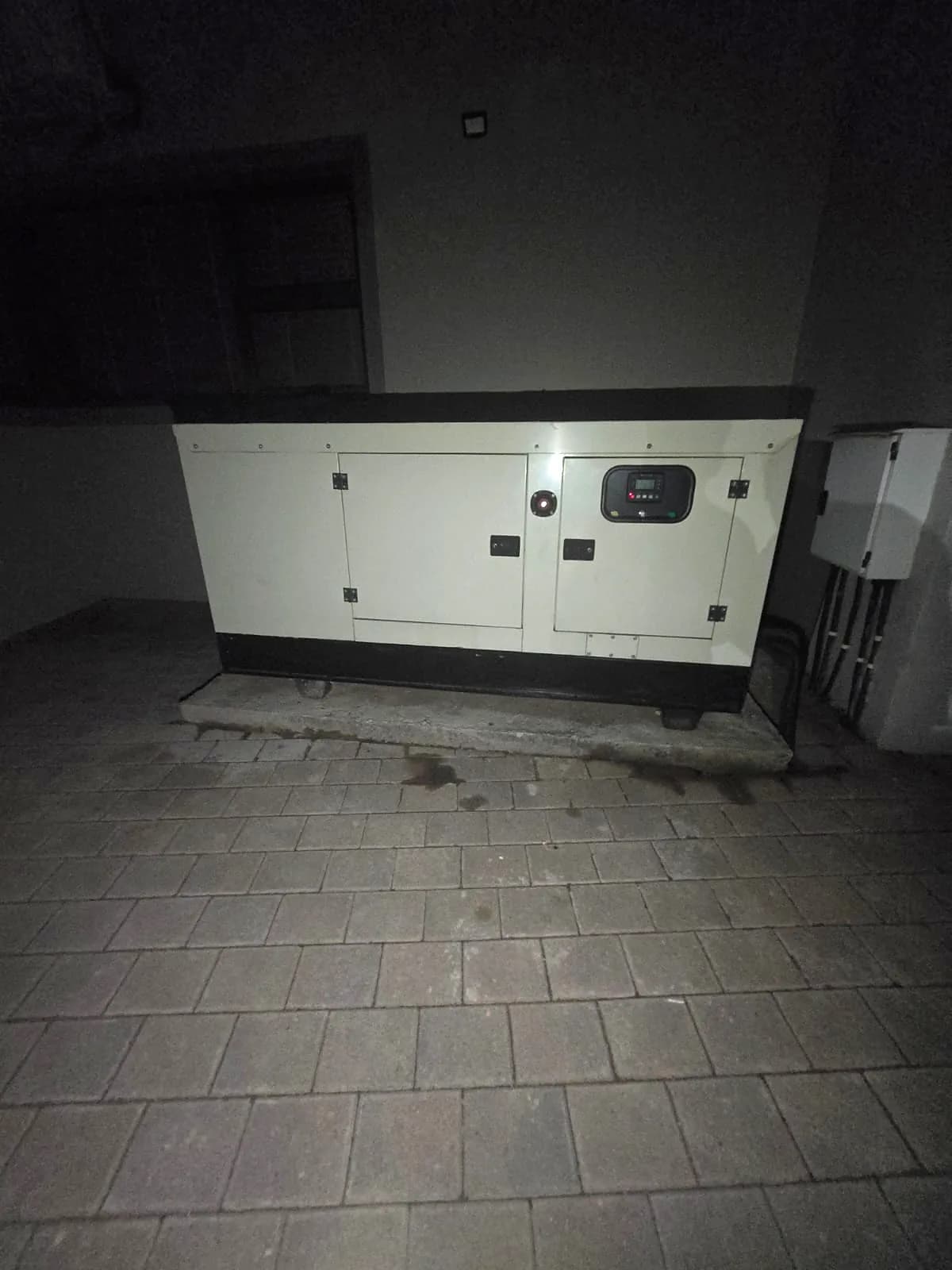
Established 2006
20 years of experience
24/7 operations
We Arrive Within 1–2 Hours
(usually within 1 hour)
Free callouts and quotations
One-year warranty
Qualified and certified technicians
We Service & Repair All Generator Brands
All generator makes and models
1 kVA–20,000 kVA capability
Call now if
What counts as a generator emergency
No power when it matters: Generator not starting
The set will not start during load shedding or an unplanned outage, and the site depends on it: a home with medical equipment, a clinic or pharmacy fridge, a cold room full of stock, or a server room whose UPS batteries are running down.
It will not take over from the mains: ATS and changeover problems
The generator runs, or should start on its own, but the load never transfers and the building stays dark. The fault can sit in the controller, the mains sensing or the changeover contactors.
Fuel leaking or a strong fuel or gas smell: Leaks
Diesel dripping onto a hot exhaust or near electrical gear is a fire risk, and a leaking tank or pipe can empty itself onto the paving overnight. Switch the generator off and keep people and ignition sources away. On a gas generator, call your gas supplier as well as us.
Smoke, a burning smell or overheating: Smoke
Heavy black or white smoke, the smell of hot insulation, or a high-temperature alarm means the set should stop now. Running on can turn a repairable fault into a seized engine or a burnt alternator.
Shutting down again and again: Shutting down or tripping
It starts, carries the load for a while, then stops on an alarm, over and over. If the alarm is real, such as low oil pressure, every restart does more damage.
Voltage that is harming equipment: Voltage problems
Lights burning unusually bright or pulsing, electronics switching themselves off, or a hot smell from appliances. Switch off sensitive equipment first, then call.
While you wait: safe steps only
These steps protect people and stop a fault getting worse. None of them needs tools or a cover removed.
- Press the emergency stop, or switch the generator off, if there is smoke, a fuel leak, a burning smell or a new noise
- Keep people, children and pets away from the set, and keep flames, cigarettes and sparks away from any fuel
- Stop after a few failed start attempts: continued cranking overheats the starter and flattens the battery
- Let a hot engine cool, and never open the radiator cap while it is hot
- If the voltage looks wrong, switch off computers, televisions and chargers until the supply has been checked
- Photograph the controller screen and any alarm list before anything is reset
- If the outage may be long, plan for the critical load: move medicines or perishable stock, and shut servers down in an orderly way while the UPS still holds
To stop and isolate the generator, use its emergency stop and its own output breaker. Leave the changeover panel, and anything behind a cover, to the technician.
What to tell us when you call
A minute of detail on the phone means the technician arrives with the right parts and tools, and often with a good idea of the fault.
- Where the generator is and how to reach it: gate codes, security, after-hours access
- Make, model and size in kVA from the rating plate, and whether it runs on diesel, petrol or gas
- A photo of the controller screen showing the alarms, sent on WhatsApp
- What happened: when it stopped, what it was doing, and anything you noticed such as a bang, smoke, a smell or a leak
- What it powers and how critical that load is, so the response can be planned around it
- The hour-meter reading and when it was last serviced, if you know
Not sure where the rating plate is? A photo of the whole generator and its controller is enough to start.
After you call
How an emergency callout works
- 01
You call, at any hour
We answer at any hour (24/7), take the details, and tell you what is safe to check and what to leave alone until the technician arrives.
- 02
A technician comes to you
We arrive within 1–2 hours, usually within 1 hour. Free callouts and quotations.
- 03
The fault is found
The technician reads the controller history and tests the generator, its controls and the changeover, then explains what has failed and why.
- 04
Made safe or repaired
Once you approve the quotation, the repair is done on the spot where the part is to hand. If it is not, the set is made safe and power restored where that can be done safely.
- 05
Tested before we leave
The set is started, takes the load and runs while the technician watches the readings, so you see it carrying the site before we leave.
Making it safe now, and the full repair after
| What we find | Making it safe straight away | The full repair |
|---|---|---|
| Fuel leaking from a pipe, filter or tank fitting | Making it safe straight awayIsolate the fuel, contain the spill, and make a temporary repair only if the set can then run safely. | The full repairReplace the failed pipe, seal or fitting and check the rest of the fuel system. |
| Flat battery or failed charger | Making it safe straight awayCharge or replace the battery so the set can start. | The full repairFind why it went flat: the charger, the charge alternator or the connections. See battery not charging. |
| Failed sensor, relay or controller | Making it safe straight awayRun the set so the site has power only if the fault leaves every engine and alternator protection working; if it does not, leave the set isolated. | The full repairReplace and configure the part, then test the full start and changeover sequence. See control panel repairs. |
| Changeover contactor or ATS fault | Making it safe straight awayIsolate the failed part so the site runs safely on either mains or generator, never both. | The full repairReplace the contactor, coil or interlock, then test transfer and return. |
| AVR or alternator winding failure | Making it safe straight awayIsolate the output so connected equipment is protected. | The full repairFit a matched regulator, or arrange an alternator rewind. See AVR repairs. |
| Water or dirt in the diesel | Making it safe straight awayDrain the water separator, change the filters and bleed the system to get running. | The full repairDeal with the contaminated tank and find where the water gets in. See diesel contamination. |
| Engine damage after low oil pressure or overheating | Making it safe straight awayLeave the engine stopped so the damage does not spread. | The full repairDiagnose fully, then quote an engine repair or rebuild before any work starts. |
Everything beyond making it safe is quoted first. Our repair cost guide explains what drives the price.
More emergencies and where they lead
| Symptom | Likely causes | Repair route |
|---|---|---|
| Low oil pressure alarm or shutdown | Likely causesLow oil level, a failed sender or switch, a worn oil pump, or fuel diluting the oil | Repair routeLow oil pressure shutdown |
| Runs, but the building has no power | Likely causesChangeover not transferring, output breaker tripped, or no output from the alternator | Repair routeRunning but no power |
| High temperature shutdown | Likely causesCoolant loss, a blocked radiator, a broken fan belt or blocked ventilation around the canopy | Repair routeOverheating |
| Battery flat after every outage | Likely causesFailed battery charger or charge alternator, a battery at the end of its life, or frequent short runs | Repair routeBattery not charging |
Is it the generator, or the mains?
Sometimes the generator is fine and the problem is elsewhere: the changeover never sensed that the mains failed, a breaker in the distribution board tripped, or the supply came back on one phase only. We test the generator, its controls and the changeover to find where the fault actually is.
Load shedding has its own normal pattern. When the supply returns, the changeover waits to be sure the mains is stable before it transfers back, and the engine then runs unloaded for a few minutes to cool down. A set that keeps running briefly after the lights come back is usually doing exactly what it should.
Faults on the municipal or Eskom side of your meter are the supplier’s responsibility. If that is where we find the problem, we tell you so, and make sure the generator is ready to carry the load until the supply is restored.

Fewer emergencies at the next outage
Many emergency callouts during load shedding trace back to the same few things: batteries and chargers worn out by frequent starts, filters and diesel left too long, coolant and belts that were never checked, and changeovers that were never tested with the real load. Regular servicing and a maintenance plan catch most of them before they leave you in the dark.
FAQ
Frequently asked questions
Do you really come out at night, on weekends and on public holidays?
Yes. We operate 24/7. Call 076 434 7292 at any hour, on any day.
How fast will a technician get to me?
We arrive within 1–2 hours, usually within 1 hour. While the technician is on the way, send a photo of the controller screen if you can; it often tells us which parts to bring.
What does an emergency callout cost?
Free callouts and quotations. The technician finds the fault and quotes, and no repair work starts until you approve it. Our repair cost guide explains what affects the price of the repair itself.
Can you fix it on the first visit?
Where the fault allows it and the part is available, yes: faults such as a loose connection, a blocked filter or a failed relay are the kind that can often be put right on the spot. When a part has to be ordered or the work needs a workshop, we make the generator safe, restore power where that can be done safely, and agree the next step with you.
The generator is running but the house is still dark. Is that an emergency?
It can be. The changeover may not be transferring, the generator’s output breaker may have tripped, or the alternator may not be producing voltage. Do not try to move the changeover by hand. Check the generator’s own breaker, then call us. The running but no power guide explains the causes.
Can I connect a portable generator to the house while I wait?
Only through a changeover switch installed by an electrician. Plugging a generator into a wall socket back-feeds the wiring, which can electrocute someone working on the supply, and can wreck the generator when the mains returns. Until then, run essential appliances from the portable unit’s own sockets, with the unit outdoors and well away from doors and windows.
Will you work on a generator that someone else installed or services?
Yes. We Service & Repair All Generator Brands, whoever installed or last serviced them.
Which areas do you cover?
All of Gauteng. See our service areas for the regions and towns we cover.
Related pages
Related services
Related generator problems
Related brands
Who we work for
Need a generator technician?
- 24/7 operations
- We Arrive Within 1–2 Hours (usually within 1 hour)
- Free callouts and quotations