
Generator types
Diesel Generator Repairs, Servicing and Maintenance
We repair, service and maintain diesel generators of every make on site across Gauteng, from small silent sets behind homes to large standby and prime-power sets at factories. A diesel set is an engine, fuel system, cooling system and alternator working together under a controller, and we work on all of it. Most diesel trouble starts with the fuel, the batteries or too little load, so that is where good servicing concentrates.
- Engine, fuel injection, cooling, alternator, AVR and controller
- Standby, prime-power and continuous-duty sets
- Serviced by running hours, or at least once a year
- 1 kVA–20,000 kVA capability
Established 2006
20 years of experience
24/7 operations
We Arrive Within 1–2 Hours
(usually within 1 hour)
Free callouts and quotations
One-year warranty
Qualified and certified technicians
We Service & Repair All Generator Brands
All generator makes and models
1 kVA–20,000 kVA capability
How a diesel generator set works
A diesel engine has no spark plugs. It compresses air until it is hot enough to ignite fuel injected at high pressure, which makes diesels economical, long-lived and good at carrying heavy loads for hours. It also needs a strong battery to crank it and, on many engines, glow plugs or an intake heater to start on a frosty Highveld morning.
Engine speed sets the frequency. Most water-cooled sets from about 10 kVA up run at 1,500 rpm with a four-pole alternator to make 50 Hz; small air-cooled diesels run at 3,000 rpm with a two-pole alternator, so they are louder and work harder. Larger engines are usually turbocharged.
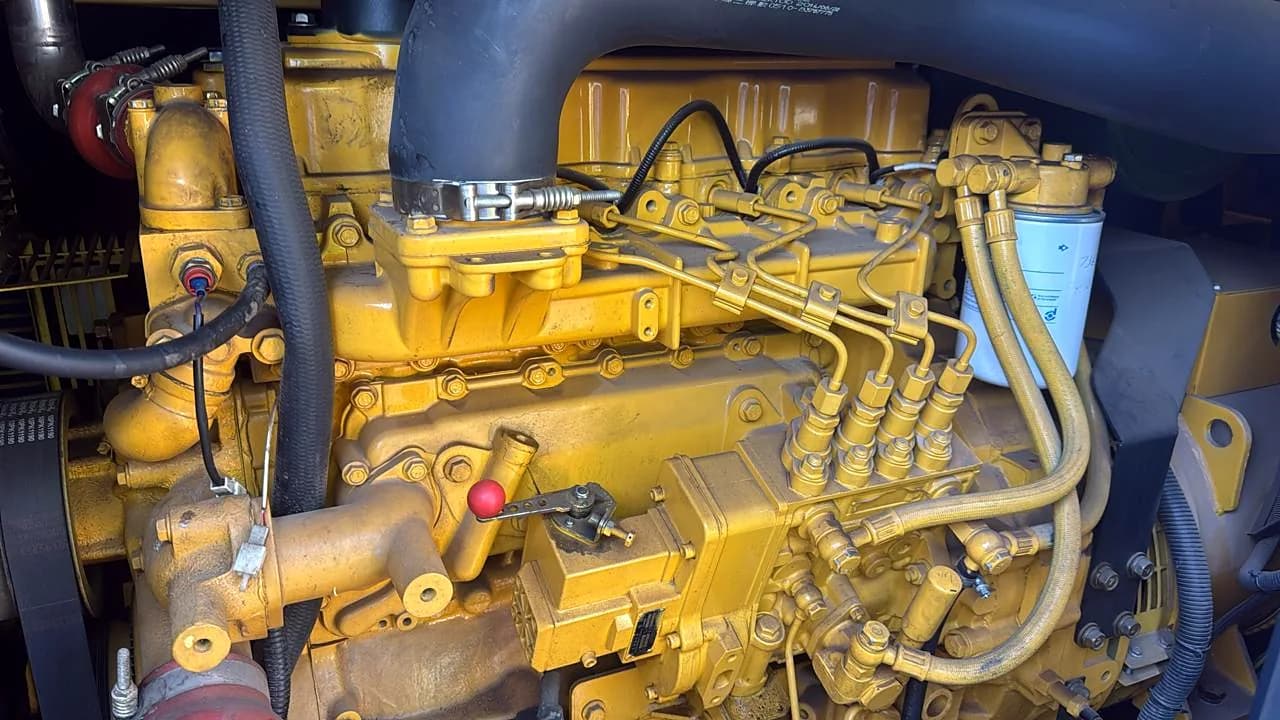
Fuel travels from the tank through a water separator and filters, drawn by a lift pump, to a mechanical injection pump or, on newer engines, an electronically controlled common rail, and on to the injectors. Every joint on that route can let in air, water or dirt, which is why so many diesel faults turn out to be fuel faults.

Around the engine
What each system does, and how it fails
Fuel system: Fuel system repairs
Separator, filters, lift pump, injection pump and injectors. Water, dirt or air at a loose joint cause hard starting, stalling and power loss.
Governor: Surging and hunting
Holds speed, and so frequency, as load changes: mechanical on small sets, electronic with an actuator and speed pickup on larger ones.
Alternator and AVR: AVR repairs
Usually a brushless alternator with an exciter and rotating diodes, though small sets may use brushes; the AVR adjusts the exciter field to hold the voltage steady.
Controller: Controller alarms explained
A DSE, ComAp, SmartGen or similar module starts the set, logs running hours and shuts it down on low oil pressure, high temperature, overspeed or a failed start.
Cooling: Coolant and radiator care
Radiator, water pump, thermostat and fan, or fins on small air-cooled sets. Large standby sets often add a jacket water heater.
Batteries and charger: Battery not charging
A 12 V or 24 V battery cranks the engine, kept charged by a mains charger between runs. A failed charger often explains a failed start.

Standby, prime and continuous ratings
A diesel set is rated for a duty, not just a size. The standby rating covers mains failures: limited hours a year at a varying load. The prime rating is lower, for a set that is the main supply and runs unlimited hours. The continuous rating is lower again, for a steady load around the clock.
So a canopy marked 250 kVA / 275 kVA usually means 250 kVA prime and 275 kVA standby. A standby rating assumes a limited number of running hours a year, a limit that heavy load shedding can pass within months, and a set worked at its standby figure day after day wears far faster. Size a set for long runs by its prime rating; see the kVA sizing guide.
From small silent sets to industrial plants
| Size | Typical engine | Where you find it |
|---|---|---|
| Up to about 10 kVA | Typical engineAir-cooled, usually single-cylinder, 3,000 rpm, as on many Kipor and Mac Afric diesels | Where you find itHomes, small shops and building sites |
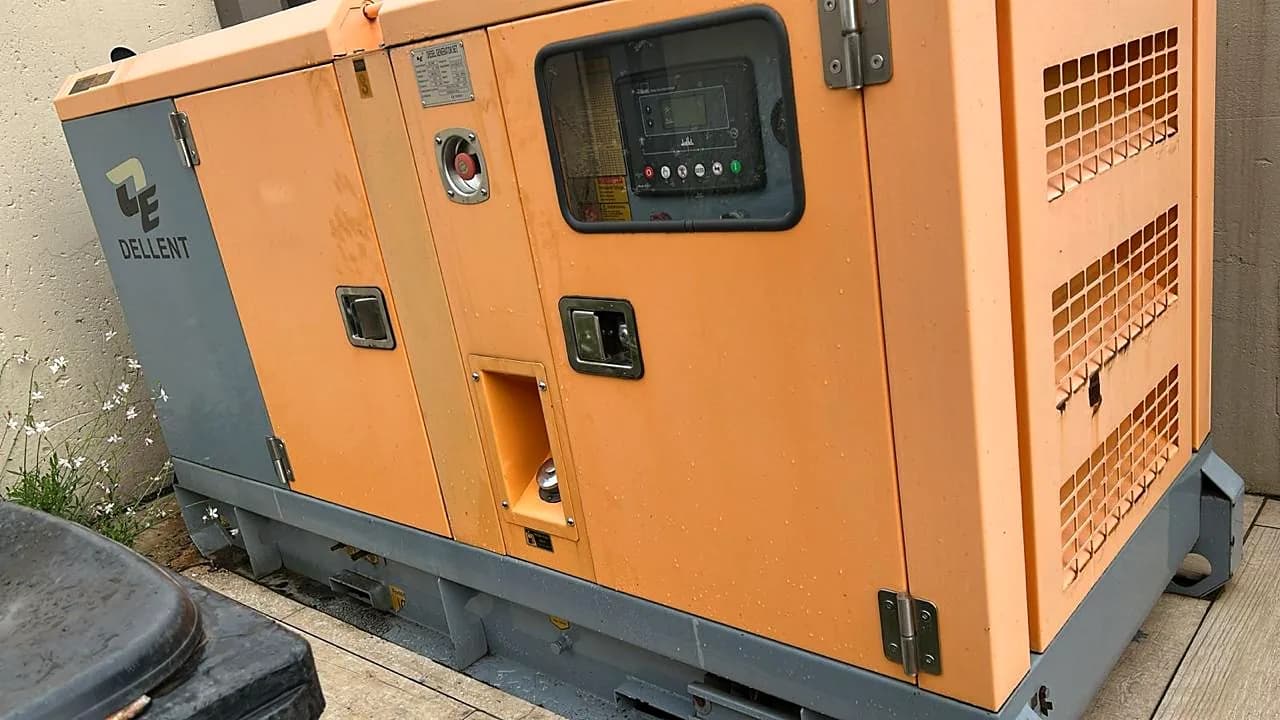
| About 10–60 kVA | Typical engineTwo to four cylinders, water-cooled, 1,500 rpm, in a silent canopy, often Kubota, Yanmar or Perkins | Where you find itLarger homes, estates, offices and clinics |
| About 60–500 kVA | Typical engineTurbocharged four- and six-cylinder engines, many electronically governed, such as Cummins or Deutz | Where you find itOffice blocks, shopping centres and factories |
| 500 kVA and up | Typical engineLarge in-line or V engines such as MTU, often several sets in parallel | Where you find itHospitals, data centres, mines and large plants |
Our 1 kVA–20,000 kVA capability covers every band in this table. For the uptime, records and contracts that large sites need, see industrial generator services.
Diesel-specific problems: fuel, wet stacking and injection
Bad fuel. Diesel takes up water from condensation, and microbes (diesel bug) grow where water and fuel meet, forming slime that blocks filters. Draining water and keeping the fuel turning over prevents most of it. See diesel fuel contamination.
Wet stacking. Long running at light load leaves unburnt fuel and soot in the exhaust, which weep out as a black, oily residue. Load shedding with only a few lights on is a classic cause. See wet stacking.
Injectors and injection pump. Worn injectors cause smoke, knocking and hard starting; a worn pump costs power. Injector testing and pump calibration are bench work for a diesel injection workshop.
- Turbocharger: oil and boost leaks cost power; a cool-down run before stopping protects it
- Air in the fuel: after running dry or a filter change, the system must be bled
Diesel generator faults and where to start
| Symptom | Likely causes | Repair route |
|---|---|---|
| Cranks but will not fire | Likely causesEmpty tank, air in the lines, blocked filters, fuel shut-off solenoid | Repair routeGenerator not starting |
| Black smoke under load | Likely causesOverload, blocked air filter, worn injectors, turbo or boost leak | Repair routeSmoke |
| Black, oily residue at the exhaust | Likely causesLong running at light load, worn injectors | Repair routeWet stacking |
| High temperature shutdown | Likely causesLow coolant, blocked radiator, slipping belt, overload | Repair routeOverheating |
| Low oil pressure shutdown | Likely causesLow oil level, faulty sender, oil thinned by fuel, worn pump | Repair routeLow oil pressure shutdown |
Servicing a diesel set by running hours
Diesel sets are serviced by running hours on the controller’s hour meter, or by time, whichever comes first, at the intervals in the engine manual. Load shedding adds hours fast: two 2-hour outages a day add about 120 running hours a month.
- Oil and oil filter, with the old oil checked for fuel or coolant
- Fuel filters, and water drained from the separator and tank
- Air filter, and the intake checked for leaks
- Coolant strength, hoses, belts and the radiator core
- Battery, terminals and charger output
- Controller alarm log, shutdown sensors and emergency stop
- Output voltage and frequency, and a test run under load where possible
Book this as a one-off generator service, or on a maintenance plan with test runs and fuel care through the year. For a fault, see generator repairs. Either way, have the make, model and kVA, the hour-meter reading and a photo of the controller screen ready when you call.
FAQ
Frequently asked questions
How often should a diesel generator be serviced?
By running hours or by time, whichever comes first, at the intervals in the engine manual, and at least once a year even if the set has hardly run. A set that carried the load through months of load shedding can be due long before its yearly date.
Why should a diesel generator be run under load?
A diesel that only runs lightly never gets hot enough to burn its fuel cleanly, so carbon and unburnt fuel build up (wet stacking). Regular running under real load, or a load bank test, burns it off.
Do you work on small silent diesel generators as well as large sets?
Yes. We Service & Repair All Generator Brands, from small air-cooled and silent diesels at homes to large prime-power and standby sets on commercial and industrial sites. The faults differ with size, but the fuel, battery and light-load problems on this page affect them all.
Related pages
Related services
Related generator problems
Generator types
Who we work for
Need a generator technician?
- 24/7 operations
- We Arrive Within 1–2 Hours (usually within 1 hour)
- Free callouts and quotations