
Generator problems
Wet Stacking in Diesel Generators: Causes, Signs and Cures
The short answer
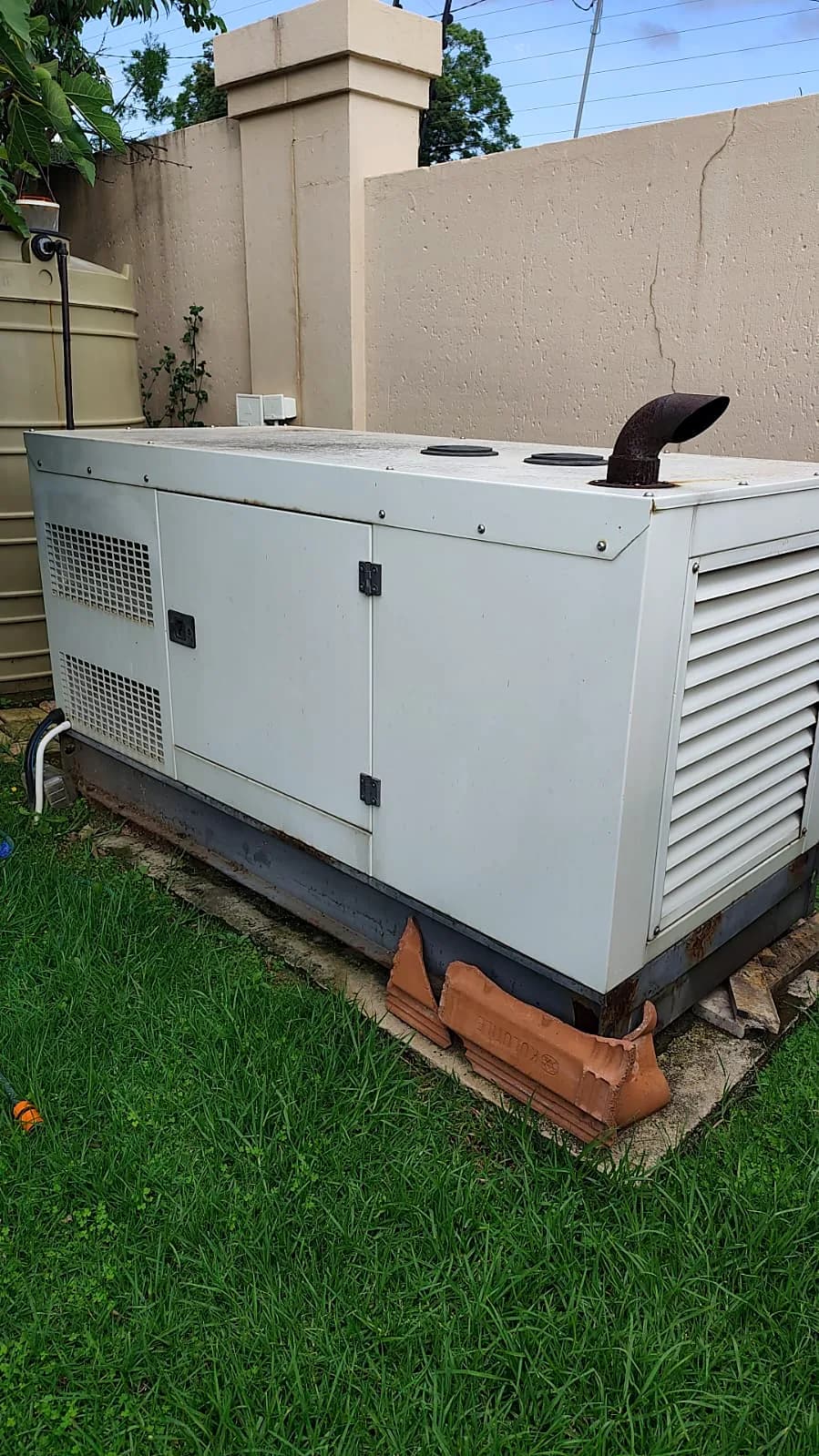
Wet stacking is the build-up of unburnt diesel, lubricating oil and soot in a generator’s exhaust, caused by running the engine too lightly for it to reach proper combustion temperature. It shows as black, oily liquid weeping from exhaust joints and the outlet. It is cleared with a controlled run at a higher load, and prevented by sizing, loading and testing the set properly.
- Black, oily drips at the exhaust mean light running, not a leak
- Caused by light loads, oversized sets and long no-load test runs
- Cleared with a stepped run at a higher load
- Prevented by correct sizing, sensible loading and periodic load tests
Need it fixed rather than diagnosed?
Free callouts and quotations. We arrive within 1–2 hours, usually within 1 hour.
What happens inside a lightly loaded diesel
A diesel has no spark plug: it relies on the heat of compressed air to ignite the fuel. At a light load the injectors deliver only a small amount of fuel per stroke, so the combustion chambers, cylinder walls and exhaust stay relatively cool. Some of the fuel does not burn completely. It condenses on the cool cylinder walls and passes out with the exhaust as a wet, sooty vapour.
Piston rings also need combustion pressure behind them to press firmly against the cylinder wall. With little pressure they seal less well: lubricating oil creeps up into the chamber, and unburnt fuel washes down into the sump. On turbocharged engines, low boost lets oil seep past the turbocharger seals as well. The mixture of fuel, oil and carbon collects in the manifold, turbocharger, silencer and stack, then drips from the joints as the black, tar-like liquid often called slobber.

Causes
Why it happens
A set larger than its load: kVA sizing guide
Sets are often sized for the biggest moment, such as a borehole pump or compressor starting, or for a whole house that never runs all at once. The everyday load is then a small share of the rating.
Load-shedding evenings
A home set that runs for hours each day carrying lights, a fridge, the router and a television is doing a fraction of the work it was built for, day after day.
Long no-load exercise runs: Standby generators
Many standby controllers start the set every week and run it without transferring any load. It proves the engine starts, but each run adds a little more residue.
Light loads after hours
An office, school or complex set sized for the working day may carry only security lighting, servers and a lift on standby through the night.
Solar and batteries taking over
Where solar panels and a battery inverter now carry the essential circuits, the diesel set that once ran the house may be left with very little to do.
Short runs and a cold engine
Brief outages and frequent short starts mean the engine rarely reaches working temperature. A thermostat stuck open has the same effect on every run.
Signs of wet stacking
| Symptom | Likely causes | Repair route |
|---|---|---|
| Black, oily liquid dripping from exhaust joints, the silencer or the stack | Likely causesUnburnt fuel, oil and soot condensing in a cool exhaust | Repair routeStepped load run and exhaust clean |
| Heavy black or grey smoke when a real load comes on | Likely causesDeposits in the exhaust burning off, and fouled injectors spraying poorly | Repair routeSmoke diagnosis |
| Oil level rising on the dipstick, oil thin or smelling of diesel | Likely causesFuel washing past the rings into the sump and diluting the oil | Repair routeOil change, then find the cause |
| Loss of power, rough running, slow to take load | Likely causesCarbon on injector tips and valves; a turbocharger fouled with soot | Repair routeInjector and fuel system work |
| Oil consumption rising, blue smoke | Likely causesCylinder bores glazed so the rings no longer seal | Repair routeEngine assessment |
| White or grey haze at light load that clears under load | Likely causesCombustion temperature too low to burn the fuel completely | Repair routeLoading and sizing review |
What it does to the engine over time
Early wet stacking is mostly a nuisance: stained canopies and paving, smoke when the load comes on, and complaints from neighbours in a complex. Left for months, it starts to cost money.
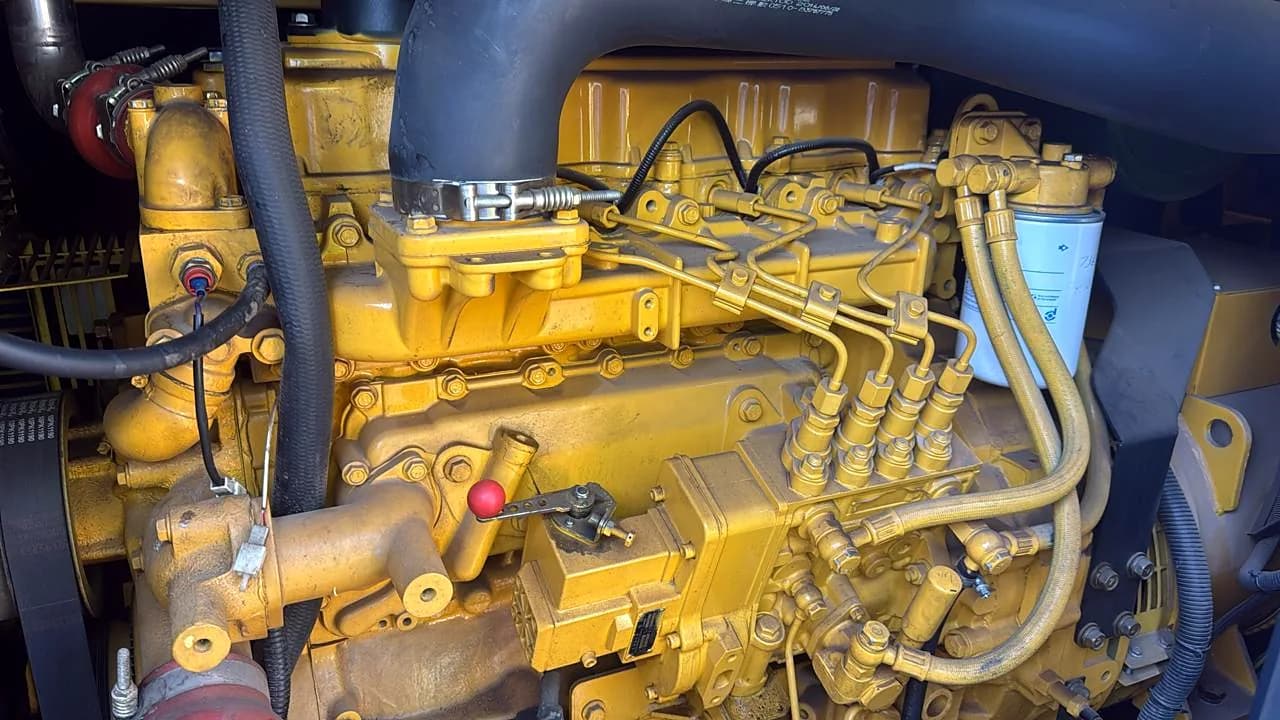
Carbon builds up on the injector tips and disturbs the spray, so combustion gets worse and more residue forms. Soot fouls the turbocharger. Fuel and carbon that keep coating the cylinder walls at low pressure fill the fine cross-hatch left when the bores were honed, leaving a hard, mirror-like surface, known as glazing, that the rings cannot seal against and that holds no oil film. Once that happens, oil use and blow-by rise, and a sustained load run no longer helps. Fuel-diluted oil protects the bearings less well.
- Fouled injectors and turbocharger
- Glazed bores and higher oil consumption
- Diluted oil and faster bearing wear
- A fire risk when residue in a hot exhaust ignites
Duty patterns that lead to it, and what helps
| How the set is used | Why it causes wet stacking | What helps |
|---|---|---|
| Weekly automatic exercise with no load transferred | Why it causes wet stackingThe engine warms briefly but never works | What helpsExercise on the building load where the changeover allows it, plus a periodic load test |
| Evening and overnight load-shedding slots with only light loads | Why it causes wet stackingHours at a small share of the rating | What helpsRun heavier loads on the generator circuit, such as a pool pump, while the set is on, within its rating |
| Sized for a motor start, not the running load | Why it causes wet stackingThe running load is a small fraction of the set | What helpsReview the sizing; a soft starter on the motor can reduce the start surge |
| Office or complex set after hours | Why it causes wet stackingOnly lighting, servers and lifts on standby | What helpsSchedule loaded runs and a periodic load bank test |
| Frequent short runs | Why it causes wet stackingThe engine never reaches working temperature | What helpsFewer, longer runs where possible, and a thermostat check |
Signs you can safely look for
All of these are look-and-note checks, made with the generator stopped and the exhaust cool unless stated.
- Black, oily drips or streaks at the exhaust joints, the outlet, and on the canopy, wall or paving below
- What is usually connected while the set runs, and the kW or percentage load on the controller if it shows one
- Whether the weekly exercise run transfers load or runs the engine unloaded
- The oil on the dipstick when cold: higher than last time, thin, or smelling of diesel?
- From a safe distance, the exhaust when a large load switches on: heavy black or grey smoke?
- Photos of the residue and of the controller screen, to send with your enquiry
Remedies
How wet stacking is cleared
- 01
Inspect first
The exhaust, oil, coolant temperature, thermostat and air filter are checked, so a heavily fouled set is not loaded blind.
- 02
Change diluted oil
If fuel has thinned the oil, the oil and filters are changed before the engine is worked hard.
- 03
Stepped load run
Load is raised in stages and held so exhaust temperature climbs gradually and burns the deposits out. A load bank burn-off is arranged and quoted for the site.
- 04
Service the injectors
Where poor running persists, the injectors are tested, cleaned or replaced.
- 05
Recheck and adjust
The exhaust is inspected after the run, and the loading and exercise settings are changed so it does not return.
Stopping it from coming back
The cure for wet stacking is work. Run the set under a reasonable share of its rated load, well above a light load: many engine manufacturers advise against prolonged running at low load, and the operation manual for your engine is the reference for its minimum. Avoid long exercise runs with nothing connected, and use load-shedding hours to run useful loads within the set’s rating.
Where the set is simply too big for its everyday load, the kVA sizing guide shows how to check it. A periodic load bank test proves the set at full output and clears early deposits, and a maintenance plan built around how the set is really used catches fuel dilution and residue at each service. Send us the make, model, kVA and a note of what it usually carries, and we will advise.
FAQ
Frequently asked questions
Is wet stacking dangerous?
It is not an immediate danger, but it is not harmless. It wears the engine, thins the oil and leaves flammable residue in the exhaust that can ignite when the engine finally runs hot. Have it dealt with rather than ignored.
Can wet stacking be reversed?
Early wet stacking usually clears with a sustained, stepped run at a higher load and an oil change. Once the cylinder bores have glazed, loading alone will not restore them and engine work is needed.
Is the black liquid at my exhaust an oil leak?
Usually not. Black, sooty, oily drips at exhaust joints and the outlet are typical of wet stacking. Oil, fuel or coolant dripping under the engine is a leak; see generator leaks.
How often should a lightly loaded set be run on load?
It depends on how lightly it runs and for how long. A sensible starting point is to exercise it on the building load where the changeover allows, with a load bank test about once a year; a set that already shows residue may need one sooner. We set a plan around how the set is actually used.
Would a smaller generator be better?
Sometimes. If the everyday load is a small fraction of the rating, a smaller set may suit, but it must still start your largest motor and carry the peak. Check with the kVA sizing guide before deciding.
Do petrol and gas generators suffer from wet stacking?
Wet stacking is a diesel problem. Petrol and gas engines use spark ignition and a throttle, so they do not wet stack in the same way, although long light running can still leave carbon deposits.
Related pages
Related generator problems
Generator types
Related brands
Who we work for
Need a generator technician?
- 24/7 operations
- We Arrive Within 1–2 Hours (usually within 1 hour)
- Free callouts and quotations