
Installation
Generator and Changeover Installation for Homes and Businesses
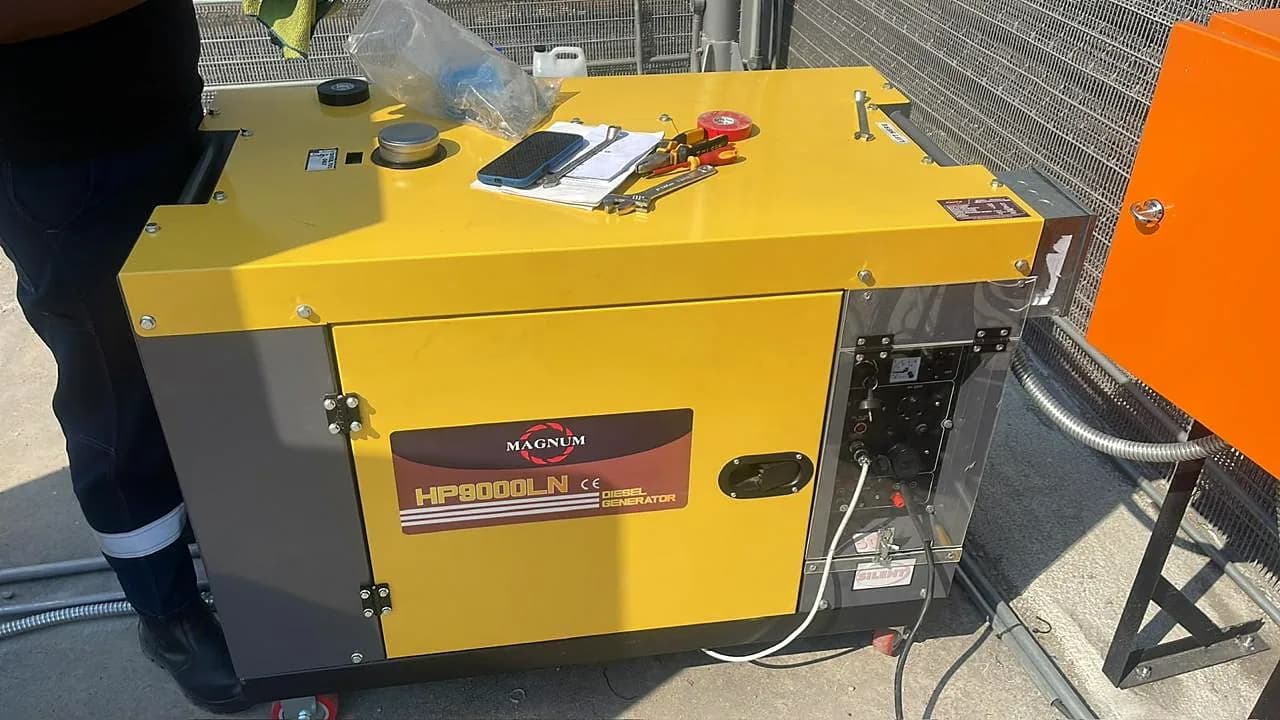
A generator installation covers choosing the right size, siting the set safely, connecting it through a manual changeover or an automatic transfer switch (ATS), and commissioning it under load. We plan each installation around what must keep running during load shedding and outages, and around your property, so the generator works properly from the first outage.
- Sizing from what must run, including motor starting
- Siting for ventilation, exhaust, noise and access
- Manual changeover or ATS, interlocked against back-feeding
- Commissioning, a test under load and a proper handover
Established 2006
20 years of experience
24/7 operations
We Arrive Within 1–2 Hours
(usually within 1 hour)
Free callouts and quotations
One-year warranty
Qualified and certified technicians
We Service & Repair All Generator Brands
All generator makes and models
1 kVA–20,000 kVA capability
Process
From site visit to handover
- 01
Assess the load and the site
What must run during an outage, how it starts, where the set can stand, and how it will connect to the distribution board.
- 02
Size and plan
Generator size and phases, the base or plinth, fuel storage, exhaust route and type of changeover, set out in a written quotation.
- 03
Prepare the site
The plinth or base, the cable route, and any enclosure, cage or screening the property needs.
- 04
Install and connect
The set is positioned and levelled, fuel and exhaust are fitted, and the changeover is installed and connected by a registered electrical contractor.
- 05
Commission and test
Start-up checks, protection and alarm settings, a simulated mains failure to prove the changeover, and a run under load.
- 06
Hand over
A walk-through of starting, stopping, alarms and refuelling, with the test results and documents.
Sizing: start with what must run
Size is the decision that is hardest to undo. A set that is too small trips or stalls when a borehole pump, compressor or air conditioner starts, because motors draw several times their running current for a moment. A set that is far too big runs lightly for hours every load-shedding slot, and a lightly loaded diesel suffers from wet stacking.
For most homes the answer is a set that carries the essential circuits, such as lights, plugs, the fridge, the gate motor, the alarm and the borehole pump, rather than the whole house with its geysers and stove. Businesses usually size from measured demand and the equipment that must not stop. Our kVA sizing guide walks through the sum.
The supply and the loads decide the phases. A single-phase home normally takes a single-phase generator. On a three-phase supply a three-phase generator is the usual choice, with the single-phase loads spread evenly across the phases, and it is essential where three-phase motors or pumps must run. Where only a few single-phase essential circuits need backing up, a single-phase set feeding a separate essential-circuits board can be enough. The guide to single-phase and three-phase power explains the difference.
Planning
Siting the generator
Ventilation
Cooling air must flow in, and hot air and exhaust must leave without being drawn back in. A set boxed into a corner or a cramped passage breathes its own hot air and overheats.
Exhaust
Outdoors or in a ventilated plant room, never in a garage or living space. The exhaust is routed away from windows, doors, air intakes and neighbours, because it carries carbon monoxide.
Noise
A canopied silent set, a sensible position and some distance all reduce noise. Municipal noise bylaws and estate or body corporate rules often apply, so check them before the position is fixed.
Base and drainage
A level concrete plinth that stands clear of the water that pools in a Highveld storm, with space for any spill to be contained.
Fuel storage
A base tank sized for the runtime you need between refills, a clear refuelling route and protection against leaks and contamination. Large external tanks can bring fire-safety and municipal requirements.
Access and security
Room around the set to open the doors, change filters and connect a load bank, and a cage or locked enclosure where theft of batteries and diesel is a risk.
Manual changeover or automatic transfer switch?
| Feature | Manual changeover | Automatic transfer switch (ATS) |
|---|---|---|
| How it works | Manual changeoverSomeone starts the generator and moves a changeover switch from mains to generator, then back when power returns | Automatic transfer switch (ATS)The controller senses the mains failure, starts the set and transfers the load, then transfers back once the mains is stable |
| Who must be there | Manual changeoverA person on site for every outage | Automatic transfer switch (ATS)Nobody; it works at night and when the property is empty |
| Generator needed | Manual changeoverAny set with a suitable output | Automatic transfer switch (ATS)A set with electric start and an auto-start controller, with mains sensing in the controller or the ATS panel |
| Suits | Manual changeoverHomes and small businesses with someone present, working to a known load-shedding schedule | Automatic transfer switch (ATS)Businesses, critical loads, and homes where nobody should have to go outside in the dark |
| What drives the cost | Manual changeoverSimpler switchgear and less wiring | Automatic transfer switch (ATS)The ATS panel, controller and control wiring; an older set may need an auto-start upgrade |
Faults on an existing changeover, such as an ATS that will not switch, are covered under ATS and changeover problems.

Electrical compliance and gas supplies
Connecting a generator to a building’s fixed wiring makes it part of the electrical installation, which in South Africa must comply with SANS 10142-1. That connection must be made by a registered electrical contractor, who issues a Certificate of Compliance (CoC) for the work. Ask for the CoC at handover and keep it with the generator’s documents, because it is needed when the property is sold and insurers may ask for it.
Gas generators also need a registered gas installer for the gas supply: the pipework, regulator and connection to the gas source, with a certificate of conformity for the gas installation. A portable generator that only runs appliances on extension leads is not connected to the wiring and needs no changeover, but it must still run outdoors. We confirm the compliance requirements for your installation when we quote.

Homes, estates and business premises
At home, the usual installation is a silent generator on a plinth beside the house, with an ATS so it takes over during load shedding without anyone going outside. Space is often tight, so the position balances airflow, noise for the neighbours and estate rules. See residential generator services, and how automatic standby generators work.
For businesses, the installation is planned around what must not stop: tills, servers, cold rooms, security and lifts. Larger sets need a solid base, contained fuel storage and a changeover sized for the main supply. Commercial generator services covers the ongoing care once the set is in.
- Homes: essential circuits, quiet running, automatic changeover
- Businesses: critical loads, three-phase supplies, larger fuel storage
- Both: commissioning under load and servicing planned from day one
What you receive at handover
An installation is not finished until you know how to live with the generator.
- A walk-through of starting, stopping, the emergency stop and what the controller alarms mean
- How the changeover works, and what to do if it does not transfer
- The commissioning results: voltage, frequency and the test under load
- The CoC from the registered electrical contractor who made the connection
- The manuals, and when the first service falls due by date and running hours
- A recommended service schedule, with ongoing generator maintenance plans available
FAQ
Frequently asked questions
What size generator do I need?
It depends on what must run during an outage and how it starts. Motors, pumps and compressors draw several times their running current when starting. We size from a site assessment; our kVA sizing guide explains the basics.
Do I need an automatic changeover?
If you want the generator to take over without anyone present, for example at night or while you are away, yes. A manual changeover costs less but needs someone to start the generator and switch over every time. Either type must be interlocked.
Do I need a Certificate of Compliance?
Yes, if the generator is connected to the building’s fixed wiring. It then forms part of the electrical installation, and the connection must be covered by a CoC from a registered electrical contractor.
Can a generator be installed in a garage?
Not in an enclosed garage or anywhere its exhaust can reach living spaces, because generator exhaust contains carbon monoxide. A set must stand outdoors, or in a plant room designed with ventilation and an exhaust routed outside.
Do I need permission from my estate or body corporate?
Often, yes. Many estates and sectional title schemes have rules on position, noise, screening and running hours, and municipal noise bylaws apply everywhere. Check before the position is fixed, and we plan the installation around the rules that apply.
Can my existing generator be connected with an ATS?
Usually, if the set has electric start and its controller supports mains sensing and auto start, or can be upgraded to a controller that does. We check the generator first and include any upgrade in the quotation.
Can you take over servicing after installation?
Yes. See generator servicing for single visits and maintenance plans for ongoing care.
Related pages
Related generator problems
Who we work for
Need a generator technician?
- 24/7 operations
- We Arrive Within 1–2 Hours (usually within 1 hour)
- Free callouts and quotations