
Generator types
Petrol Generator Repairs, Servicing and Maintenance
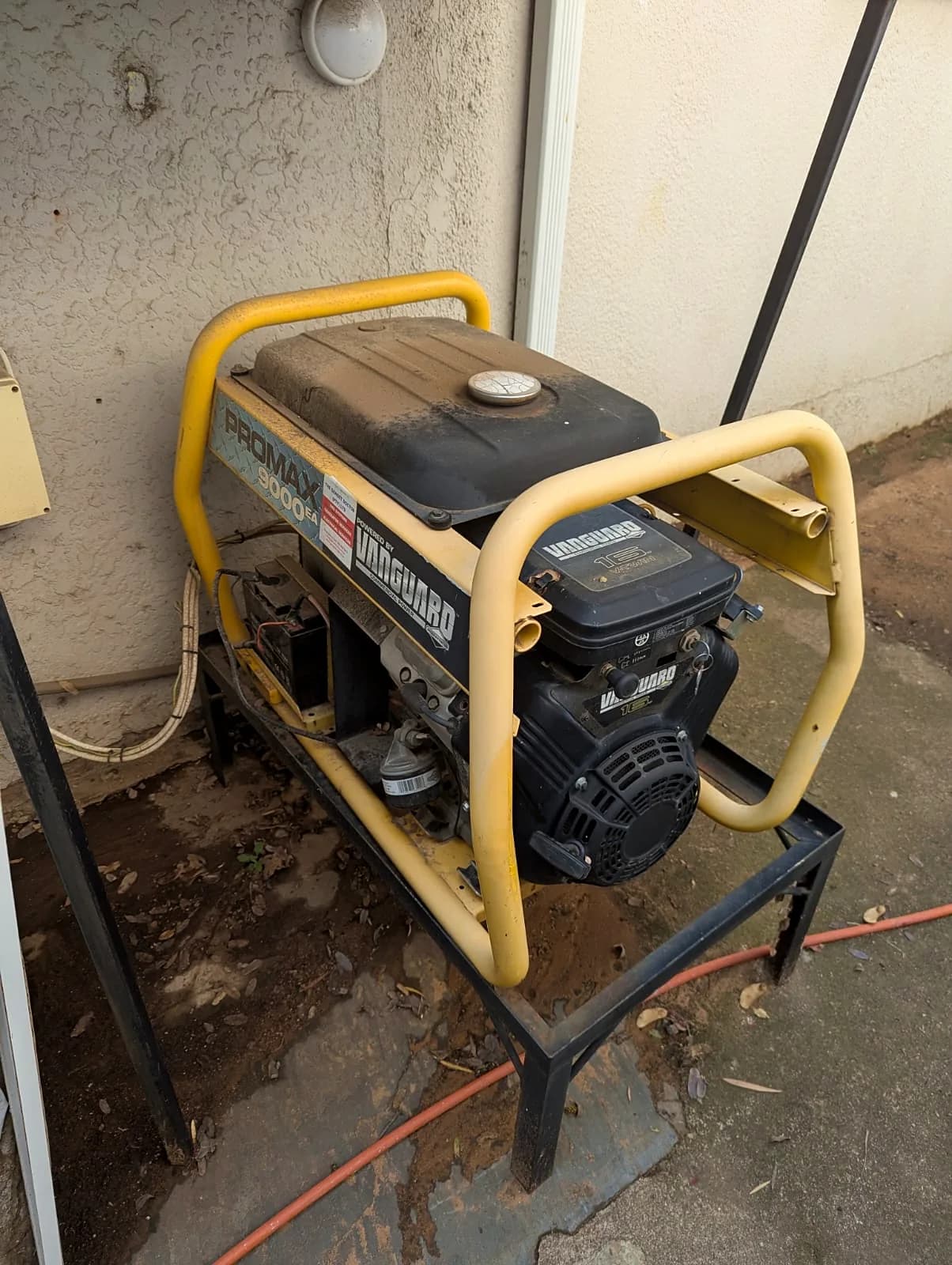
Most petrol generator breakdowns come down to fuel and oil: petrol left standing gums up the carburettor, and a low oil level trips the oil-alert switch so the engine will not run. We repair and service petrol generators of every make on site in Gauteng, from 1 kVA portables to the open-frame units that carry homes and small businesses through load shedding.
- Carburettor cleaning, jets, float and needle valve
- Spark plug, ignition coil and stop circuit
- Recoil and electric starting
- Oil-alert cut-outs and engine wear
Established 2006
20 years of experience
24/7 operations
We Arrive Within 1–2 Hours
(usually within 1 hour)
Free callouts and quotations
One-year warranty
Qualified and certified technicians
We Service & Repair All Generator Brands
All generator makes and models
1 kVA–20,000 kVA capability
How a petrol generator engine works
Most petrol generators use a single-cylinder, air-cooled, four-stroke engine; the largest often use an air-cooled V-twin. The carburettor mixes petrol with air, a spark plug fired by an ignition coil beside the flywheel lights it, and the flywheel fan blows cooling air over the cylinder. With no radiator or fuel injection the engine is light and cheap, but it depends on clean fuel, clean air and enough oil.
A mechanical governor holds the engine at about 3,000 rpm, the speed a two-pole alternator needs for 50 Hz, as the load changes. Inverter units work differently; see portable and inverter generators.
Most units also have an oil alert: a float switch in the crankcase that cuts the ignition when the oil level drops. A unit that starts and dies with fuel in the tank is very often just low on oil.
Stale fuel and the carburettor
Petrol does not keep. Its lighter parts evaporate within weeks, and over a few months it oxidises into a varnish that blocks the carburettor’s jets, some finer than a pin. Where ethanol is blended in, which many owner’s manuals warn about, it also draws in moisture that can corrode the float bowl.
A proper clean means stripping the carburettor, clearing the main and pilot jets, checking the float and needle valve, and fitting new gaskets, with the tank, fuel line and tap screen cleaned too. Where the body is corroded, a replacement carburettor is often the better repair.
- Use fresh petrol of the octane in the manual
- Close the fuel tap and run the carburettor dry before storage
- Before a long lay-up, drain the tank outdoors or add a fuel stabiliser
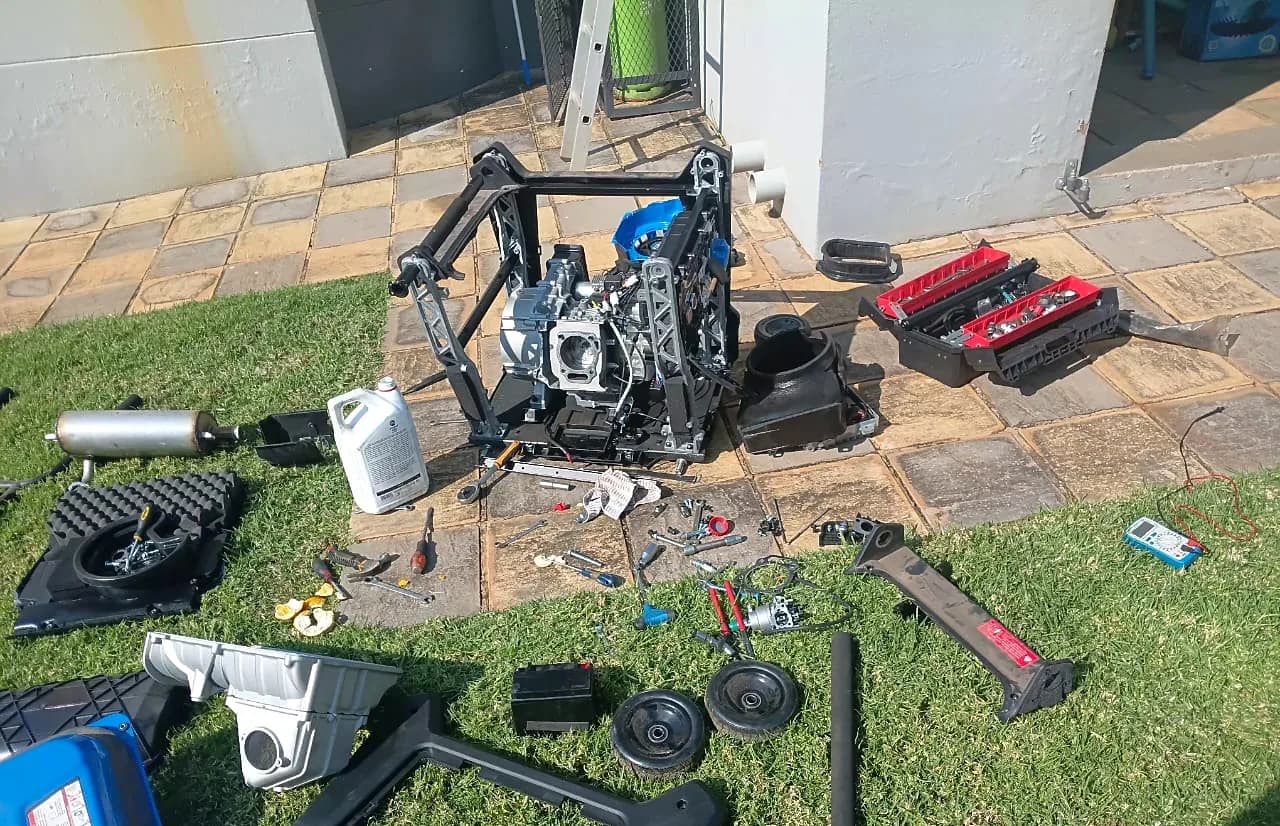
Other parts that wear on a petrol generator
Spark plug and ignition coil: Generator not starting
A fouled plug causes hard starting and misfires; a failed coil gives no spark. A chafed stop-switch or oil-alert wire can kill the spark too.
Recoil starter
Frayed ropes, broken springs and worn pawls are everyday repairs. A cord that will barely pull may mean a flooded cylinder, so do not force it.
Electric start and battery: Battery not charging
Larger units add a 12 V battery, starter motor and key switch. A battery left standing for months goes flat and sulphates.
Air filter and spark arrestor: Smoke
A clogged air filter richens the mixture and gives black smoke; a spark arrestor screen blocked with carbon chokes the exhaust. Both cost power.
Valves and compression: Repair or replace
Valve clearances that close up with wear make a hot engine hard to start. Worn rings show as blue smoke and oil use, the point where repair or replacement is weighed up.
Brushes, AVR or capacitor: Running but no power
Worn brushes, a failed AVR or a failed capacitor leave the engine running with dead sockets.
Petrol generators through load shedding
Load shedding turned many petrol generators into daily workhorses. Open-frame units from makes such as Ryobi, Lutian and Mac Afric, and units built on Honda engines, cope if they get fresh fuel and oil. Two or three outages a day add hours quickly, so check the oil at every refuel and expect services to fall due within weeks, not once a year.
On a small unit, keep to lights, TV, Wi-Fi, a fridge and the gate motor, not the geyser, kettle or stove: an overloaded unit runs flat out while the voltage sags. The kVA sizing guide shows how to add up a load.
Use suitable extension leads, or have a changeover switch and inlet fitted by a registered electrical contractor, who issues a Certificate of Compliance (CoC) for the work. Never feed a house through a wall socket with a double-ended lead: it back-feeds the supply and can kill someone working on the lines. More on home generator services.
Petrol generator problems and their usual causes
| Symptom | Likely causes | Repair route |
|---|---|---|
| Will not start after standing | Likely causesStale fuel in the carburettor, fuel tap closed, fouled spark plug | Repair routeGenerator not starting |
| Starts, then dies within seconds | Likely causesLow oil tripping the oil alert, choke left on, partly blocked pilot jet | Repair routeGenerator not starting |
| Surges up and down, lights pulse | Likely causesPartly blocked jets, air leak at the carburettor, sticking governor linkage | Repair routeFrequency and speed problems |
| Runs, but the sockets are dead | Likely causesTripped breaker, worn brushes, failed AVR or capacitor, lost residual magnetism | Repair routeRunning but no power |
| Black or blue exhaust smoke | Likely causesChoked air filter, stuck choke or overload; blue smoke means oil is burning | Repair routeSmoke |
Servicing a petrol generator
| Task | Why it matters | When |
|---|---|---|
| Oil level and change | Why it mattersSmall, hot-running engines use and wear their oil quickly | WhenLevel at every refuel; change at the hours in the manual |
| Air filter | Why it mattersA dirty filter richens the mixture and costs power | WhenEach service, more often in dusty yards |
| Fuel tap screen and carburettor bowl | Why it mattersSediment and stale fuel block the jets | WhenEach service, and before storage |
| Spark plug, valves and spark arrestor | Why it mattersWear here costs starting and power | WhenAt the intervals in the manual |
| Output test | Why it mattersProves voltage and frequency hold under load | WhenEach service |
A generator service covers this on site and generator repairs cover faults. Several units can go on a maintenance plan.
FAQ
Frequently asked questions
Why does my petrol generator start and then stop after a few seconds?
Usually the oil is low and the oil alert is stopping it. With the engine cold and the unit level, check the dipstick and top up. If the level is right, a blocked carburettor or faulty oil-alert switch is next, which needs a technician.
Can I leave petrol in my generator?
For a few weeks, yes. For longer, close the tap and run the carburettor dry, then drain the tank outdoors with the engine cold, or add a fuel stabiliser.
Should I use 93 or 95 petrol?
Use the octane the owner’s manual specifies. Inland, both 93 and 95 unleaded are sold, and a higher octane gives no benefit in an engine designed for the lower one. Fresh fuel matters far more than octane.
Is a petrol generator worth repairing?
Usually, yes: carburettor, ignition, starter and AVR repairs cost much less than a new unit. Major engine damage is where replacement starts to make sense; the repair or replace guide sets out how to weigh it up.
Related pages
Related generator problems
Generator types
Who we work for
Need a generator technician?
- 24/7 operations
- We Arrive Within 1–2 Hours (usually within 1 hour)
- Free callouts and quotations