
Generator problems
Low Oil Pressure Alarm: Why the Generator Shut Itself Down
The short answer
A low oil pressure shutdown means the controller saw the engine’s oil pressure fall below its safe limit and stopped the engine before the bearings could be damaged. The cause is one of three things: too little oil or the wrong oil, a false reading from the pressure switch, sender or wiring, or a genuine loss of pressure inside the engine. Check the oil level with the engine stopped and the set standing level, and do not keep resetting and restarting it.
- Check the dipstick with the engine stopped and the set level
- Write down the alarm text and when it appeared
- Do not keep resetting the alarm and restarting
- Never bypass or disconnect the oil pressure switch
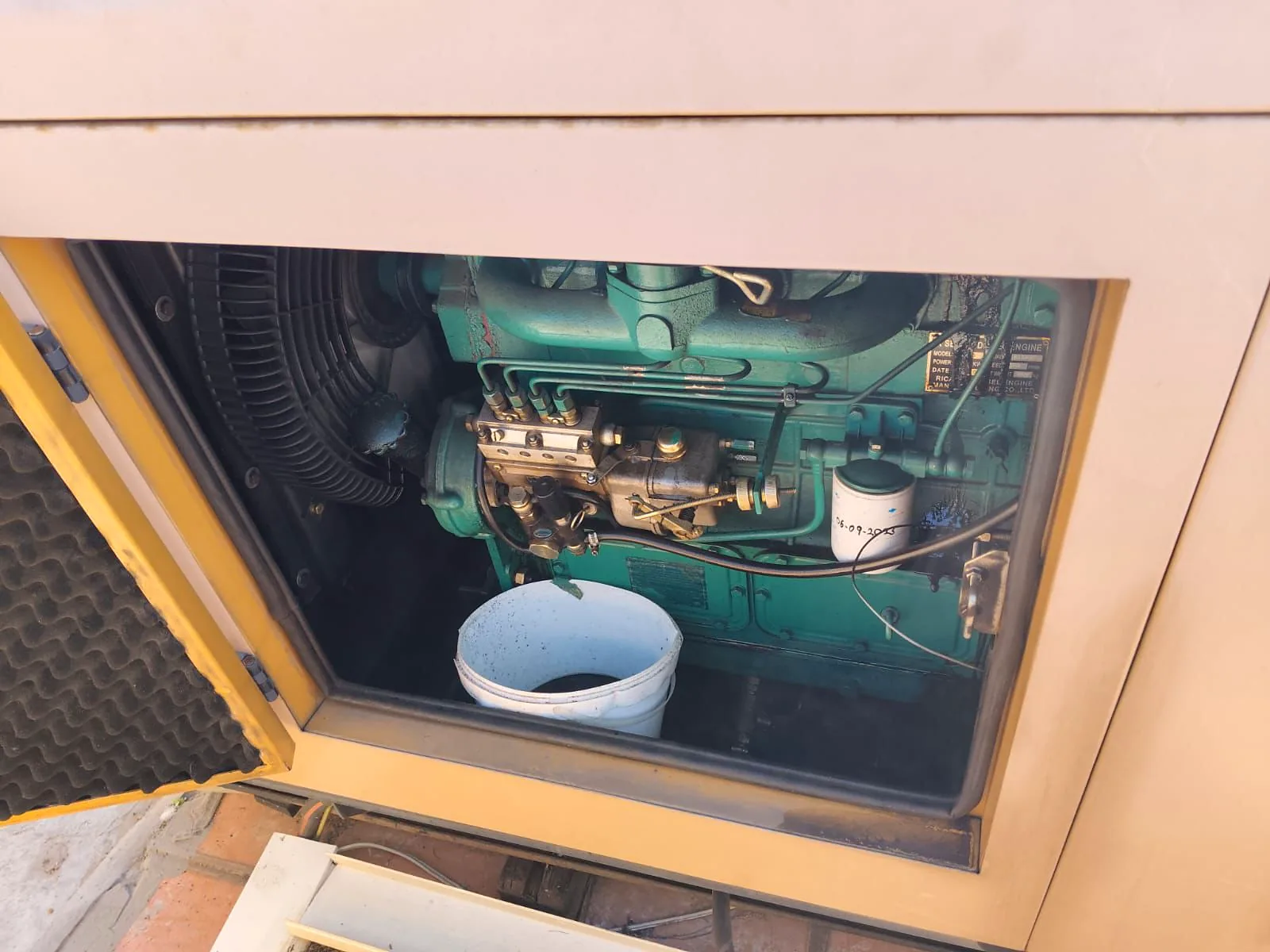
Need it fixed rather than diagnosed?
Free callouts and quotations. We arrive within 1–2 hours, usually within 1 hour.
What the oil pressure alarm is protecting
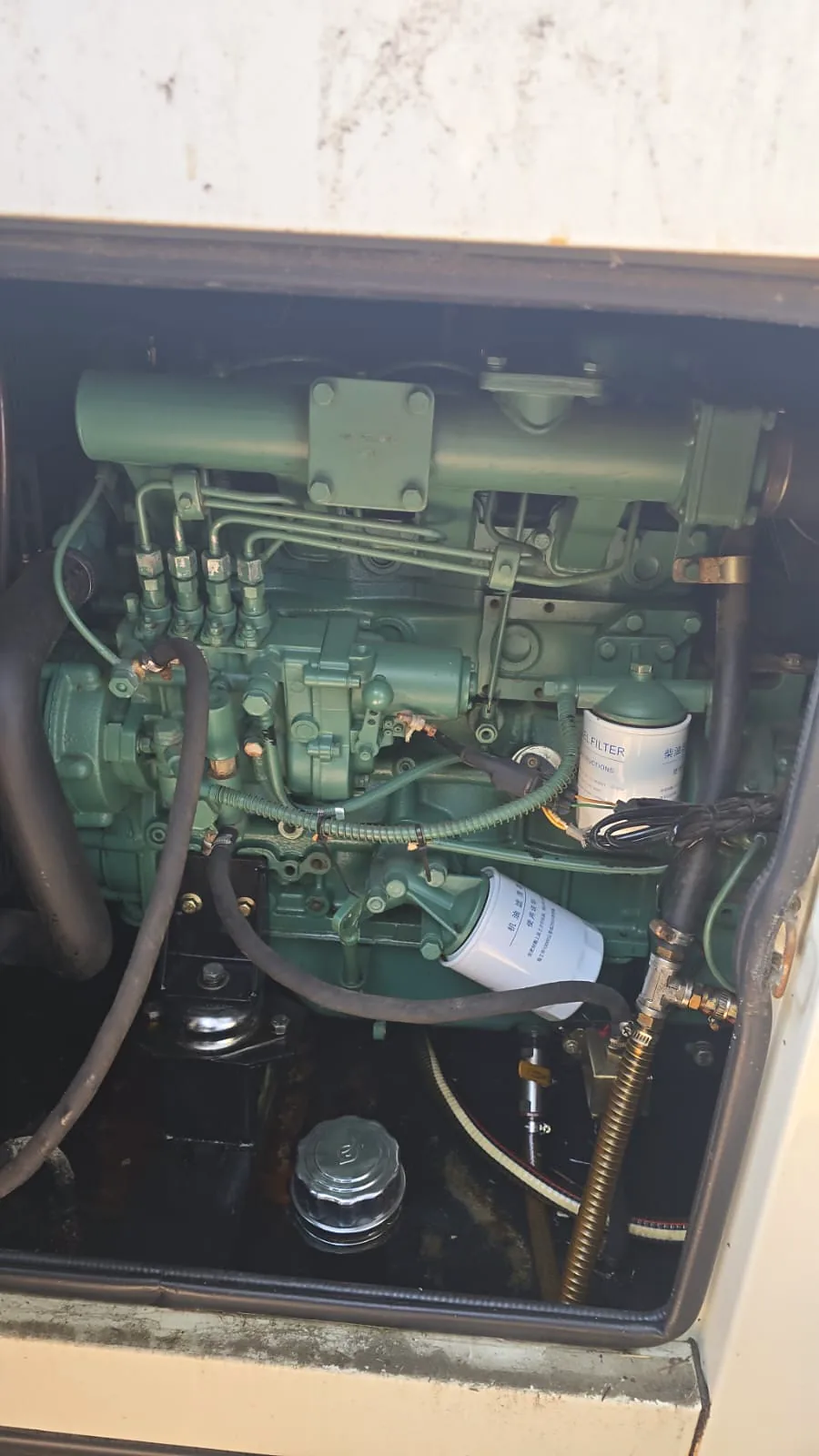
A diesel engine’s crankshaft and camshaft turn in plain bearings that, in a healthy engine, never touch the metal around them. They ride on a thin film of oil, pumped from the sump through a pickup screen, past a pressure relief valve and through the oil filter into drillings that feed each bearing, the turbocharger and the valve gear. Oil pressure is the sign that this film is being kept up.
If the pressure falls, the film breaks down and metal rubs on metal. Bearings can score or seize within a short time, and a seized engine is one of the most expensive failures a generator can have. That is why low oil pressure is set up as a shutdown. Many controllers give a warning first, but once the pressure falls below the shutdown level the engine stops at once, without the cool-down run given to electrical trips. Controller alarms explained sets out how warnings, trips and shutdowns differ.
The pressure reaches the controller in one of two ways. A pressure switch opens or closes at a fixed point, so it can only say “low” or “normal”. A pressure sender gives a varying signal that the controller shows as a reading on its screen. On electronically managed engines, the engine’s own control unit measures the pressure and passes it on. Any of these can fail, which is why the reading has to be proved before the engine is blamed.
- Pump and pickup screen draw oil from the sump
- The relief valve stops pressure rising too high
- The filter cleans the oil before the bearings
- A switch or sender reports to the controller

When it shuts down tells you where to look
| Symptom | Likely causes | Repair route |
|---|---|---|
| Shuts down within seconds of starting, every time | Likely causesOil level very low, a failed switch or sender, a broken or earthed wire, or a delay so short that pressure is checked before it has built | Repair routeSensing and settings check |
| Runs normally when cold, shuts down once hot | Likely causesOil too thin from the wrong grade, an overdue change or fuel dilution; worn bearings that leak more oil when hot | Repair routeOil change and a hot pressure test |
| Oil level rising, and the oil smells of diesel | Likely causesFuel getting into the sump from long light-load running, a leaking injector or a pump seal | Repair routeWet stacking |
| Oil level keeps dropping, oil under the set | Likely causesA leaking seal, gasket, filter or drain plug; or oil being burnt past worn rings or a turbo seal | Repair routeLeaks |
| Alarm after the set has been moved, or where it stands on a slope | Likely causesOil near the minimum mark, so the pickup can draw air when the set leans and the oil runs to one end of the sump | Repair routeLevel the set and correct the oil level |
| Engine sounds normal, but the reading jumps or drops to zero | Likely causesSender, wiring, connector or earth fault, or the wrong sender type set in the controller | Repair routeControl panel repairs |
| Low pressure with knocking or a metallic rattle | Likely causesWorn main or big-end bearings, a worn oil pump, or debris in the oil | Repair routeEngine repair or overhaul |
| Milky or grey oil on the dipstick | Likely causesCoolant in the oil from a head gasket, oil cooler or liner seal | Repair routeEngine repair |
Causes explained
Is it the oil, the sensor or the engine?
The oil itself: Service intervals and oil care
The level may simply be low, from steady consumption, a leak or a missed top-up. Oil of the wrong viscosity, or oil thinned by age, heat or diesel, cannot hold pressure once it is hot. A filter run far past its change interval restricts flow; most have a bypass valve that keeps oil moving, but then the bearings receive unfiltered oil.
The switch, sender or wiring: Control panel repairs
A switch that sticks, a sender that has drifted, a wire chafed through against the block or a corroded plug can all report low pressure from a healthy engine. So can a controller set for the wrong sender type, or a safety-on delay so short that pressure is checked before it has built. These false alarms are common, but only a test gauge proves one.
The engine: Generator repairs
A genuine loss of pressure comes from a worn or failed oil pump, a relief valve stuck open, a pickup screen blocked with sludge, a cracked pipe inside the sump, or worn main and big-end bearings that let oil escape faster than the pump can supply it. These are internal repairs, and bearing wear is the most serious.
Load shedding, light loads and thin oil
Load shedding has changed how many generators are used. A standby set that once ran little more than its routine test runs may now run for hours most days during heavy load shedding, so it reaches its oil change interval by running hours long before the date on the last service sticker. Oil that has done too many hours loses viscosity and protection, and a low oil pressure alarm when the engine is hot can be the first sign.
Many home and office sets are also far larger than the load they carry during an outage. At light load a diesel runs cool, burns its fuel incompletely and lets unburnt diesel slip past the piston rings into the sump. The oil level creeps up, the oil smells of fuel, and the thinned oil loses pressure as it warms. This fuel dilution goes hand in hand with wet stacking in the exhaust. Topping up does not cure it: the oil has to be changed and the cause of the dilution dealt with.
If your set runs through load shedding most days, have it serviced by running hours, and read service intervals and oil care for how the oil grade and interval are chosen.
Safe checks before you call
Write down the alarm first, because resetting or switching some controllers to off clears it from the screen. Then put the controller in off or stop, so a standby set cannot start on its own if the mains fails while you are at it.
- The exact alarm text, and whether it appeared at start-up, after a while running, or as a load came on
- With the engine stopped and the set standing level, let the engine cool so the oil drains back and the hot parts are safe to be near, then read the dipstick
- Note the oil’s condition on the dipstick: thin and smelling of diesel, milky or grey, or carrying fine metallic glitter
- Look under and around the set for fresh oil, and at the oil filter and drain plug for seepage
- Note the hour-meter reading and when the oil was last changed
- If the level is low, top up only with the grade given in the engine manual, through the filler cap, to the full mark and no higher
If the level was correct, do not restart: the cause lies elsewhere. Send us the alarm text, the oil level you found and the hour-meter reading, and we will take it from there.
Diagnosis
How a technician proves the cause
- 01
Read the event log
The controller records when the shutdown happened, and some also record the pressure, temperature and speed at that moment. Repeated shutdowns when hot or under load are a strong clue.
- 02
Fit a test gauge
A mechanical gauge in place of the sender shows the real pressure, cold and hot, with and without load. If the gauge is good and the controller disagrees, the fault is in the sensing, not the engine.
- 03
Test the sensing circuit
The switch or sender, its wire and plug, the earth path, and the controller’s sender type, trip level and safety-on delay are checked against what the engine needs.
- 04
Examine the oil and filter
A fuel smell, coolant, metal particles or a filter element full of debris point to dilution, a leak into the oil or bearing wear. Where the answer is not clear, an oil sample can be sent for analysis.
- 05
Work inwards only when needed
Only once the oil and the sensing are cleared does the work move to the pickup, oil pump and relief valve, and finally the bearings.
Repair options, from simple to major
| What was found | Repair | What follows |
|---|---|---|
| Low oil level | RepairTop up with the correct grade | What followsFind the leak, or the reason the engine is using oil |
| Wrong grade or overdue oil | RepairOil and filter change with the oil the engine specifies | What followsService by running hours from then on |
| Fuel in the oil | RepairOil and filter change | What followsFix the injector or pump seal, or the light-load running behind it; a load test can be arranged |
| Faulty switch or sender | RepairReplace it with the type the controller is set up for | What followsTest that the alarm still stops the engine |
| Wiring, plug or earth fault | RepairRepair or replace that part of the harness | What followsSecure it away from heat and vibration |
| Controller settings | RepairSet the sender type, trip levels and safety-on delay to suit the engine, never to silence the alarm | What followsRecord the settings for future visits |
| Pump, relief valve or pickup fault | RepairRepair or replace the part and clean the sump | What followsPressure checked hot and cold on a test gauge |
| Worn bearings | RepairEngine overhaul, quoted or arranged after inspection | What followsWeigh it up with our repair or replace guide |
FAQ
Frequently asked questions
Can I just top up the oil and restart the generator?
If the dipstick showed the oil well below the minimum, topping it up to the full mark with the correct grade and restarting once is reasonable, as long as you watch it and stop if the alarm returns or the engine sounds rough. Then find out where the oil went. If the level was already correct, topping up will not help and restarting puts the engine at risk, so call us instead.
Why does my generator shut down on low oil pressure only when it is hot?
Oil thins as it heats up. Oil of the wrong grade, oil overdue for a change or oil diluted with diesel can hold pressure when cold and lose it at running temperature. Worn bearings behave the same way, because their larger clearances let more hot, thin oil escape. A hot test-gauge reading, repeated after a change to the correct oil, tells the two apart: if fresh oil restores the pressure, the oil was the problem.
Is it just the oil pressure sender?
Sometimes. Senders, switches and their wiring do fail, and a reading that jumps about or drops to zero while the engine sounds normal points that way. But blame the sender only after a mechanical gauge has shown that the real pressure is good. Fitting a new sender to an engine that genuinely has low pressure removes the warning, not the problem.
Why does it shut down straight after starting?
Either the oil level is very low, the pressure signal is wrong, or pressure is being checked before the engine has built it. Controllers ignore oil pressure while cranking and for a short delay after the engine fires; after an oil change or a long standstill the oil system can need a few extra seconds to fill. A technician can check the setting and the sender together.
Has one low oil pressure shutdown damaged the engine?
Usually not, if the protection worked as designed and stopped the engine quickly. Damage comes from running on with low pressure, or from restarting again and again on a real fault. If the engine now knocks, smokes or sounds different, have it checked before you rely on it again.
Related pages
Related generator problems
Related brands
Who we work for
Need a generator technician?
- 24/7 operations
- We Arrive Within 1–2 Hours (usually within 1 hour)
- Free callouts and quotations