
Guides · Looking after a generator
Contaminated Diesel in Generator Tanks: Water, Diesel Bug and Sediment
Diesel in a generator tank is contaminated mainly by water, which condenses inside the tank or gets in with deliveries and rain, and by diesel bug, the microbial slime that grows where water meets fuel. Sediment, rust and the fuel’s own ageing add to it. The result is blocked filters, damaged injection equipment and a generator that stops under load, so prevention starts with keeping water out and draining what gets in.
Technical guide · Last reviewed 16 October 2026
Types of contamination
What gets into stored diesel
Water
Condensation forms inside a part-empty tank, and rain gets in through worn fill caps, vents and seals. Water is heavier than diesel, so it sinks to the tank floor, just below the fuel pickup.
Diesel bug
Bacteria, yeasts and moulds live at the water–fuel boundary and feed on the fuel. They form a dark slime that blocks filters, and their acidic by-products corrode tanks and injection parts.
Sediment and rust
Dirt from refuelling and rust from steel tanks settle on the floor, until a low fuel level or a fresh delivery stirs them up.
Ageing fuel
Over months, diesel oxidises and forms gums and fine sediment. Any biodiesel content attracts water and can make fuel age faster.

Where the water comes from
A tank breathes. As the air space inside warms during the day, air is pushed out through the vent; as it cools at night, moist air is drawn back in and some of its moisture condenses on the cold steel. The emptier the tank, the bigger that air space. The Highveld’s wide swing between day and night temperatures keeps this going, and in the humid summer storm season the air carries more moisture.
Add water from deliveries, from fuel poured in during rain and from damaged fill caps, and a tank that is never drained builds up a water layer. That water corrodes the tank and, if it is drawn in, damages injection parts, but its bigger effect is letting diesel bug grow.
Signs of contaminated fuel
| Sign | What it suggests |
|---|---|
| Fuel filters blocking soon after replacement | What it suggestsSludge, diesel bug or sediment being drawn from the tank |
| Water in the separator bowl | What it suggestsFree water in the tank, or water arriving with deliveries |
| A dark, slimy coating inside a used filter | What it suggestsMicrobial growth in the tank |
| Surging, power loss or stopping under load | What it suggestsFuel starvation through a restricted filter or pickup. See surging and hunting |
| Hard starting and white smoke | What it suggestsWater reaching the injection system. See smoke |
| A sour or rotten-egg smell from the tank | What it suggestsBacteria growing in water at the bottom |
Sampling
How a fuel sample is checked
- 01
Sample from the bottom
With the set unable to start, a sample is drawn from the tank drain or with a bottom sampler. Fuel from the top says little about what the pickup draws.
- 02
Let it settle
In a clean glass jar, a few minutes is enough for water and heavy dirt to sink.
- 03
Read it
Good diesel is clear and bright. Haze means fine water droplets; a bottom layer is free water; slime or strands point to diesel bug; grit is sediment.
- 04
Test further if it matters
A jar test shows obvious problems but cannot prove fuel is good. For large tanks or critical sites, a laboratory measures water, microbial growth and stability.
Storage
Containers, day tanks and bulk tanks
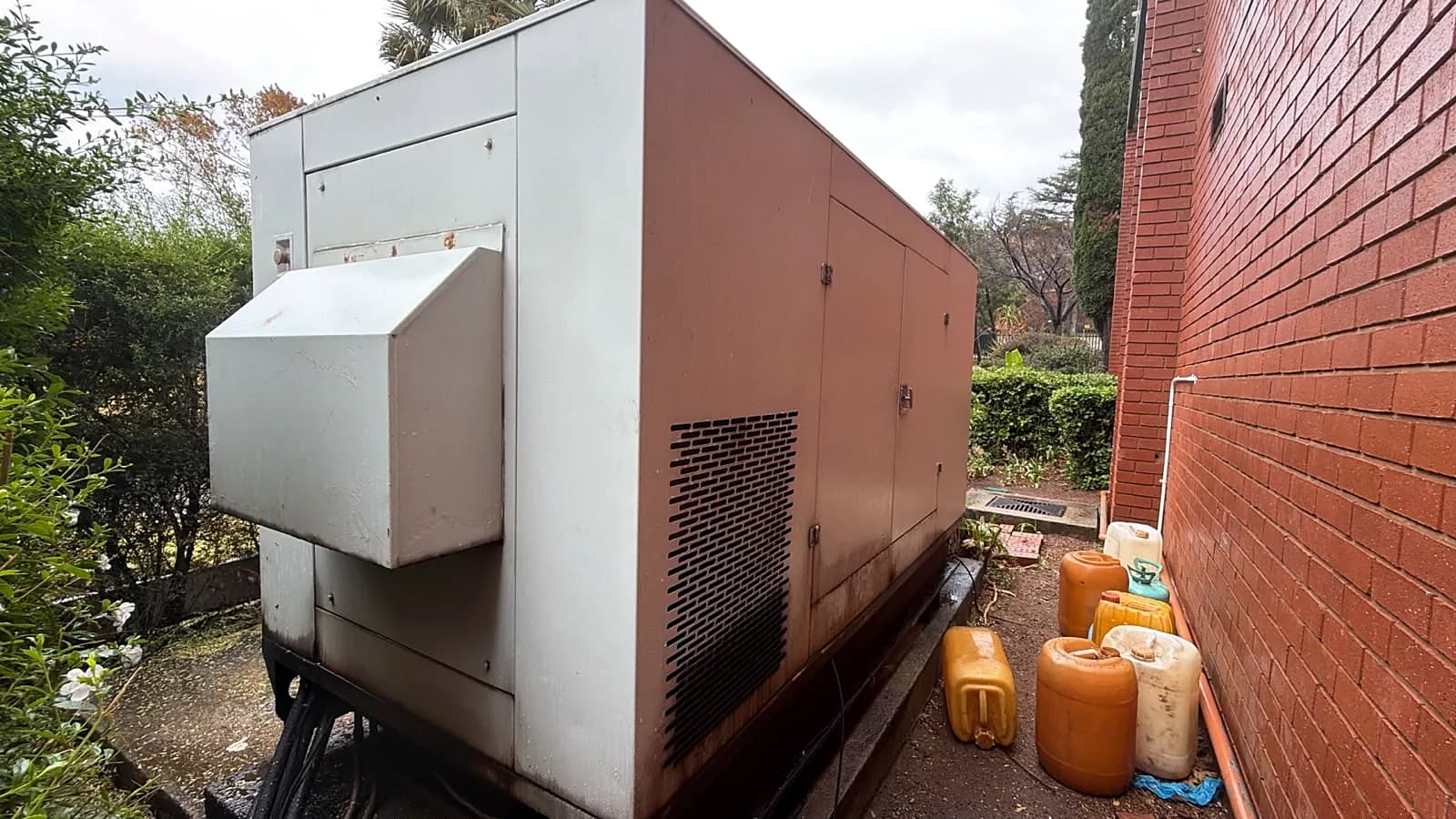
How diesel reaches the generator matters as much as how it is stored. Home and small business sets are often filled from plastic containers, and every transfer is a chance for dust or rain to get in. Containers kept outside with loose caps take in water, and the last litre in each holds whatever water and grit have settled to its bottom, so leave it out of the tank.
Larger sites may have a base tank, a day tank or a bulk tank. Each needs a sealed fill point, a vent that keeps rain and dust out, and a drain at its lowest point. Storing a large volume can also bring fire-safety and municipal requirements, worth checking before adding storage.
- Use clean, sealed containers kept only for diesel
- Fill through a funnel with a fine mesh
- Do not refuel in the rain or in blowing dust
- Keep the fill cap closed and its seal intact
Load shedding, fuel turnover and long storage
Contamination behaves differently in busy and quiet spells. When load shedding is heavy, a tank run nearly dry between deliveries draws its last fuel from just above the water and sludge on the floor, and each hurried top-up stirs that layer up and can bring in water of its own. In a quiet spell the opposite happens: a weekly exercise run uses so little that the same fuel can sit for most of a year, long enough for water to collect and diesel bug to take hold.
Plan stock around use: enough for the outages you expect, not a reserve that will sit for a year. Between outages a well-filled tank is better than a half-empty one, because it leaves less air to condense water. Have fuel that has stood for many months checked before you rely on it, ideally before winter, when demand on the grid is highest.

Filtration
Filters and water separators
The first stage, the water separator, removes free water and larger particles into a bowl with a drain; some have a sensor that raises a water-in-fuel alarm on the controller. The second stage, the fine fuel filter, stops the particles that would wear the injection pump and injectors, and modern high-pressure systems are especially sensitive to water and dirt.
Filters are changed at the interval in the engine manufacturer’s schedule, or sooner if they block, and the fuel system is bled of air afterwards. Filters that keep blocking early are telling you about the tank, not the filter.
Treating, filtering or cleaning a tank
The fix depends on how much fuel there is and how bad it is. With a little water and otherwise clear fuel, draining the tank and separator and changing the filters may be enough. Where diesel bug has taken hold, a biocide kills the microbes, but the dead slime still has to come out or it blocks the next filters.
Heavier contamination calls for filtering the fuel as it circulates through separators and fine filters until it comes up clean, or emptying and cleaning the tank and replacing the fuel; contaminated fuel and sludge go for disposal as hazardous waste. We check the separator and filters, sample the tank and arrange the filtering or cleaning that suits it. Damage already done to the lift pump, injection pump or injectors is a fuel system repair.
Keeping stored diesel clean
- Buy from a busy, reputable supplier, and keep a record of deliveries
- Keep fill caps, seals and vents in good order
- Have water drained from the tank and separators at each service
- Look at a clear separator bowl after deliveries and long runs
- Investigate filters that block before their scheduled change
- Have fuel sampled after a long quiet spell, before you rely on it
Draining, filter changes and bleeding are technician work: opening fuel lines lets air in, and a diesel with air in its lines may not restart.
FAQ
Frequently asked questions
How long can diesel be stored in a generator tank?
There is no single answer: it depends on the fuel, the tank, the temperature and how much water gets in. Clean fuel in a sealed, well-kept tank lasts far longer than fuel sitting over a layer of water, so check it regularly rather than relying on a date.
Will a fuel additive fix contaminated diesel?
Biocides kill microbial growth and some additives slow ageing, but no additive removes water, sludge or sediment. Those still have to be drained, filtered or cleaned out.
What is the black slime in my fuel filter?
Usually diesel bug, growing in water at the bottom of the tank. A new filter only buys time; the water and slime in the tank need removing too.
Why did my generator stop during a long outage after running fine on tests?
A long run pulls far more fuel through the filters than a short test, and as the level drops, sediment and slime from the tank floor are stirred up and drawn in, so contamination a test never reached can block them. See shutting down or tripping.
Can bad diesel damage the injectors?
Yes. Water and fine dirt wear the injection pump and injectors, which are made to very fine tolerances. See fuel system repairs.
Related pages
Related services
Related generator problems
Generator types
Who we work for
Need a generator technician?
- 24/7 operations
- We Arrive Within 1–2 Hours (usually within 1 hour)
- Free callouts and quotations